Brassicas & Cabbage Moth
Jun 2, 2020. Updated Mar 9, 2026.
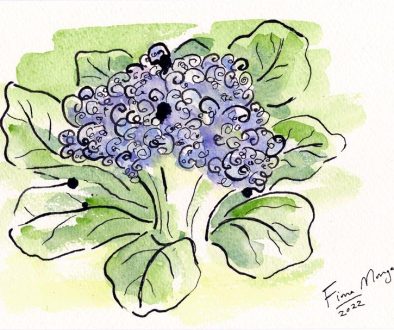
The cooler months are the better time to grow brassicas, although they do grow all year round, for a few reasons. Hang on, what are brassicas? Think cabbage, broccoli, cauliflower, brussel sprouts, kale, collards, rocket, mustard greens (tatsoi, mizuna, others), bok choy & similar, turnip, kohl rabi, swede, radish, cress. Not an exhaustive list but you get the idea!
New articles are available directly via email – sign up at http://eepurl.com/hakBgT
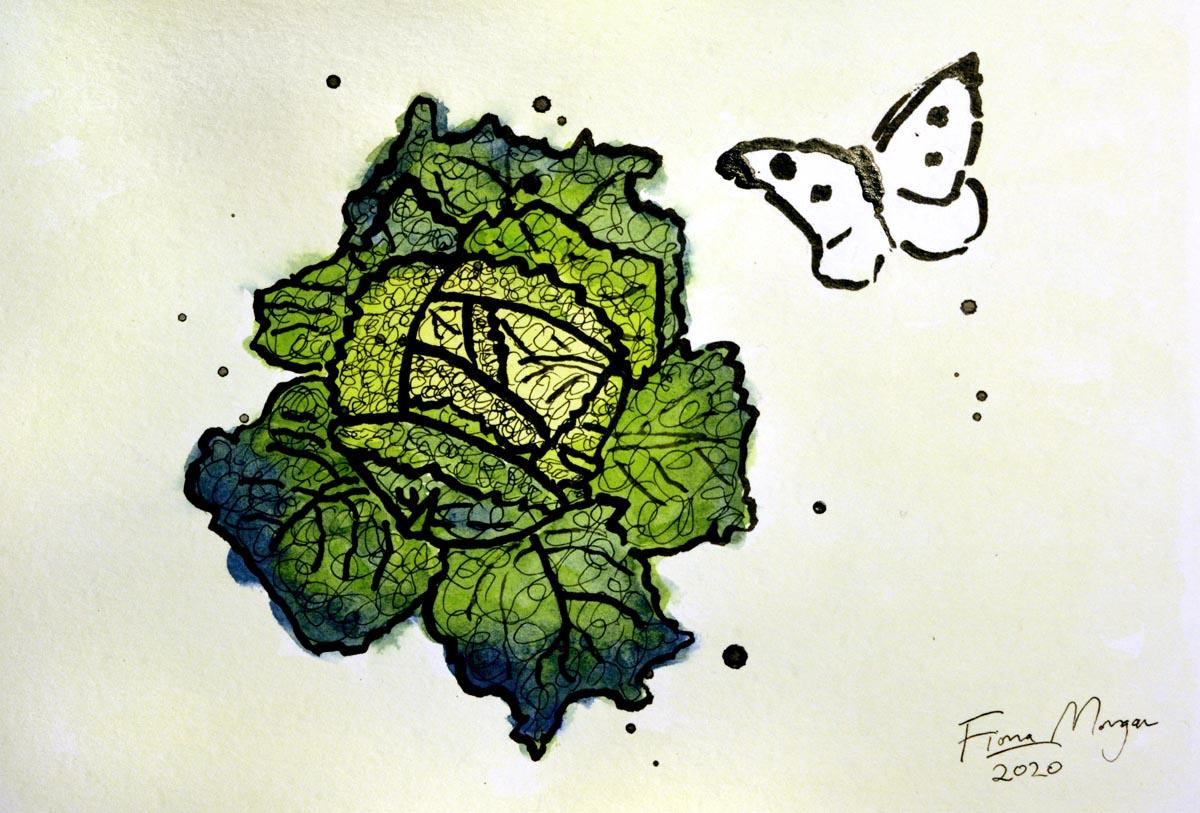
Why would you preference growing these during the cooler months? Well they grow well during this time, which is a good enough reason because not everything likes the cold. They also can tend to bolt to seed a bit quick in summer. But the big reason is our little white fluttering friend the “cabbage moth”. You may have noticed this visitor to your garden, laying tiny creamy yellow eggs on the undersides of your brassicas (squish them!!)? These hatch into little green caterpillars that decimate your plants. If you think they’re bad, they are much much worse over the warm months.
You can net your vege patch. You can plant way more than you need and hide your brassicas in amongst a tonne of other plants like nasturtiums (my favourite strategy). You can make little fake white cabbage moths and place them around your brassicas, on sticks. The moths are territorial and this sends them searching elsewhere for egg laying. Google ‘cabbage moth decoy’ or use this guide.
Another effective and certified organic option is Bacillus thuringiensis or BT. It’s sold as a spray. Also known as Dipel. BT is a common soil bacteria that works by creating proteins that when eaten are toxic to some insects. It does not affect all insects and it does not affect mammals or birds. It is deadly to caterpillars.
There’s another “cabbage moth”. Did you know?
Two different brassica massacrers have the common name of “cabbage moth”. So much confusion! One is the diamondback moth – DBM – (Plutella xylostella), a small brown moth considered “the most destructive insect pest of brassica crops across the world”. This one is a major problem commercially.
The other is our white fluttering friend, familiar to every home gardener, the cabbage white butterfly (Pieris rapae), a white moth with black dots / eyes on the wings. Both can cause serious damage to growing brassicas and are far more active in the warm season. Any caterpillars on brassicas are bad news.
If you’ve heard that planting land cress / wintercress / upland cress (Barbarea vulgaris) or upland cress / American upland cress / land cress (Barbarea verna) can be used as a dead end trap crop for “cabbage moth”, that is correct – for the diamondback moth, NOT for the cabbage white butterfly.
Planting trials have shown that both of these species (and many but not all Barbarea spp.) can interrupt the lifecycle of the DBM. The adults are highly attracted to it, lay eggs but the larvae eating the plant are poisoned and fail to thrive. Again, this strategy does not affect the cabbage white butterfly.
Thankfully, netting, overplanting, hiding your brassicas in nasturtiums and BT are each effective against both types of cabbage moth.
For cabbage white butterfly (Pieris rapae) you can also make decoys.
For diamondback moth – DBM – (Plutella xylostella) you can also plant B. vulgaris or B. verna as a dead end trap crop.
References
1. Badenes-Perez FR, Reichelt M, Gershenzon J, Heckel DG. Using plant chemistry and insect preference to study the potential of Barbarea (Brassicaceae) as a dead-end trap crop for diamondback moth (Lepidoptera: Plutellidae). Phytochemistry. 2014 Feb 1;98:137–44. doi:10.1016/j.phytochem.2013.11.009
2. Badenes-Perez FR, Shelton AM, Nault BA. Using yellow rocket as a trap crop for diamondback moth (Lepidoptera: Plutellidae). J Econ Entomol. 2005 Jun;98(3):884–90. doi:10.1603/0022-0493-98.3.884 PubMed PMID: 16022317.
3. Dimsey R, Carey D, Henderson SA. Brassica Best Practice – Integrated Pest Management [Internet]. Department of Primary Industries, Queensland; 2010 [cited 2025 Jul 12]. Available from: https://ausveg.com.au/app/data/technical-insights/docs/TL197.pdf
4. Heisswolf S. Brassica information kit (2004) [Internet]. Department of Primary Industries, Queensland; 2004. Available from: https://era.dpi.qld.gov.au/id/eprint/1965/5/brassica-grower5.pdf
5. Sanahuja G, Banakar R, Twyman RM, Capell T, Christou P. Bacillus thuringiensis : a century of research, development and commercial applications. Plant Biotechnology Journal. 2011 Apr;9(3):283–300. doi:10.1111/j.1467-7652.2011.00595.x
6. The Seed Collection [Internet]. 2021 [cited 2026 Feb 25]. How to Make Homemade Cabbage Moth Decoys. Available from: https://www.theseedcollection.com.au/blog/How-to-Make-Homemade-Cabbage-Moth-Decoys
7. Agriculture Victoria [Internet]. 2025 [cited 2026 Feb 23]. Diamondback moth – Agriculture. Located at: Victoria. Available from: https://agriculture.vic.gov.au/biosecurity/pest-insects-and-mites/priority-pest-insects-and-mites/diamondback-moth
8. Diamondback moth. In: Wikipedia [Internet]. 2025 [cited 2025 Jul 15]. Available from: https://en.wikipedia.org/w/index.php?title=Diamondback_moth&oldid=1292367650
9. Bacillus thuringiensis. In: Wikipedia [Internet]. 2025 [cited 2026 Mar 9]. Available from: https://en.wikipedia.org/w/index.php?title=Bacillus_thuringiensis&oldid=1327299840
10. Pieris rapae. In: Wikipedia [Internet]. 2026 [cited 2026 Mar 9]. Available from: https://en.wikipedia.org/w/index.php?title=Pieris_rapae&oldid=1333883223